




Table of Contents
The global telecommunications industry is facing a structural challenge: traditional connectivity revenues are no longer enough to sustain meaningful growth. As highlighted in the Deloitte 2026 Telecommunications Industry Outlook, operators are grappling with modest revenue expansion, intensifying competition, and a pressing need to find new ways to deepen customer relationships and unlock value.
At the same time, both consumers and small businesses (SMBs) are navigating an increasingly complex digital threat landscape. The convergence of these trends presents a compelling opportunity—one that telcos are uniquely positioned to seize: delivering cybersecurity services as a natural extension of connectivity.
From Connectivity Providers to Digital Trust Platforms
Deloitte’s outlook emphasizes that telecom operators are actively seeking to “grow trust and loyalty with consumers” as they evolve their strategies. This shift is not accidental. In a market where price competition is fierce and differentiation is elusive, trust has become a critical asset, and cybersecurity can be one of the most viable ways to earn it.
Consumers today expect more than just reliable connectivity. They implicitly associate their network provider with the safety of their digital experiences. When scams, phishing attacks, or data breaches occur, many users instinctively look to their telco for accountability, regardless of where the breach technically originated. Cybersecurity, therefore, is no longer a peripheral add-on; it is becoming central to the connectivity value proposition.
For telcos, this represents a fundamental repositioning from infrastructure providers to digital life protectors.
SMBs: A Widely Untapped Opportunity
If consumers represent an evolution in expectations, SMBs represent a market gap waiting to be filled.
Deloitte notes that operators are exploring new revenue streams and strategic adjacencies as traditional growth stagnates. The SMB segment is one of the most promising of these adjacencies. Small businesses have become increasingly digital – relying on cloud applications, mobile devices, and online transactions – yet they often lack the resources, expertise, and budget to implement robust cybersecurity solutions.
This creates a paradox: SMBs face real and growing cyber risk, but remain under-protected.
Telcos are uniquely positioned to resolve this gap. They already provide the connectivity backbone for SMB operations, maintain ongoing billing relationships, and possess network-level visibility that traditional cybersecurity vendors cannot easily replicate. By embedding security directly into the network, operators can deliver protection that is always-on, easy to consume, and aligned with SMB constraints.
Why Telcos Have a Structural Advantage
The Deloitte outlook underscores the industry’s search for scalable, differentiated services that can drive growth beyond core connectivity. Cybersecurity aligns perfectly with this mandate for several reasons:
- Proximity to the Threat Surface
Telcos operate at the network layer, placing them in a powerful position to detect and mitigate threats before they reach end users. This “in-line” capability enables a level of proactive protection that endpoint-based solutions alone cannot achieve. - Built-In Distribution and Trust
Unlike standalone cybersecurity vendors, telcos already have large, established customer bases. They do not need to build new distribution channels—they can cross-sell security services directly through existing relationships, leveraging billing integration and brand familiarity. In a recent global Allot survey of SMB owners and managers, 63% of SMBs said that they would trust their mobile service provider if they offered a cybersecurity solution for their business. - Simplicity at Scale
One of the biggest barriers to cybersecurity adoption, particularly for SMBs, is complexity. Telcos can eliminate this complexity by delivering security as a bundled, managed service, removing the need for installation, configuration, or specialized expertise. In the same survey, mentioned above, 72% of SMBs indicated that they were likely to purchase a comprehensive cybersecurity business solution if it did not require any installation. - Recurring Revenue Potential
As Deloitte highlights, operators are looking to diversify and stabilize revenue streams. Subscription-based cybersecurity services offer precisely that: predictable, high-margin recurring revenue that complements existing connectivity offerings.
Turning Strategy into Execution
The opportunity is clear, but execution will define success. Telcos must move beyond fragmented or add-on security offerings and embrace a more integrated approach. This includes:
- Embedding security into core connectivity packages
- Designing solutions specifically for consumer and SMB needs
- Prioritizing simplicity, automation, and “set-and-forget” experiences
- Leveraging data and network intelligence to enhance threat detection
Deloitte’s broader message, that telecom operators must rethink their business models to drive growth, applies directly here. Cybersecurity is not just another product category; it is a strategic pillar that can redefine the role of the telco in the digital ecosystem.
The Moment to Act
The telecommunications industry has reached a pivotal moment. Connectivity alone is no longer sufficient to drive differentiation or growth. At the same time, the demand for cybersecurity among both consumers and SMBs is accelerating as digital dependence deepens.
Telcos sit at the intersection of these trends. They have the infrastructure, the customer relationships, and the strategic imperative to act.
The question is no longer whether telecom operators should offer cybersecurity services. It is how quickly and effectively they can scale them, and how boldly they are willing to redefine their role in protecting the digital lives of their customers.
 Small Businesses, Big Cyber Targets | SMB Security Survey, Q2 2026
 Telco Strategies for Consumer Security 2026 (Hardenstance)
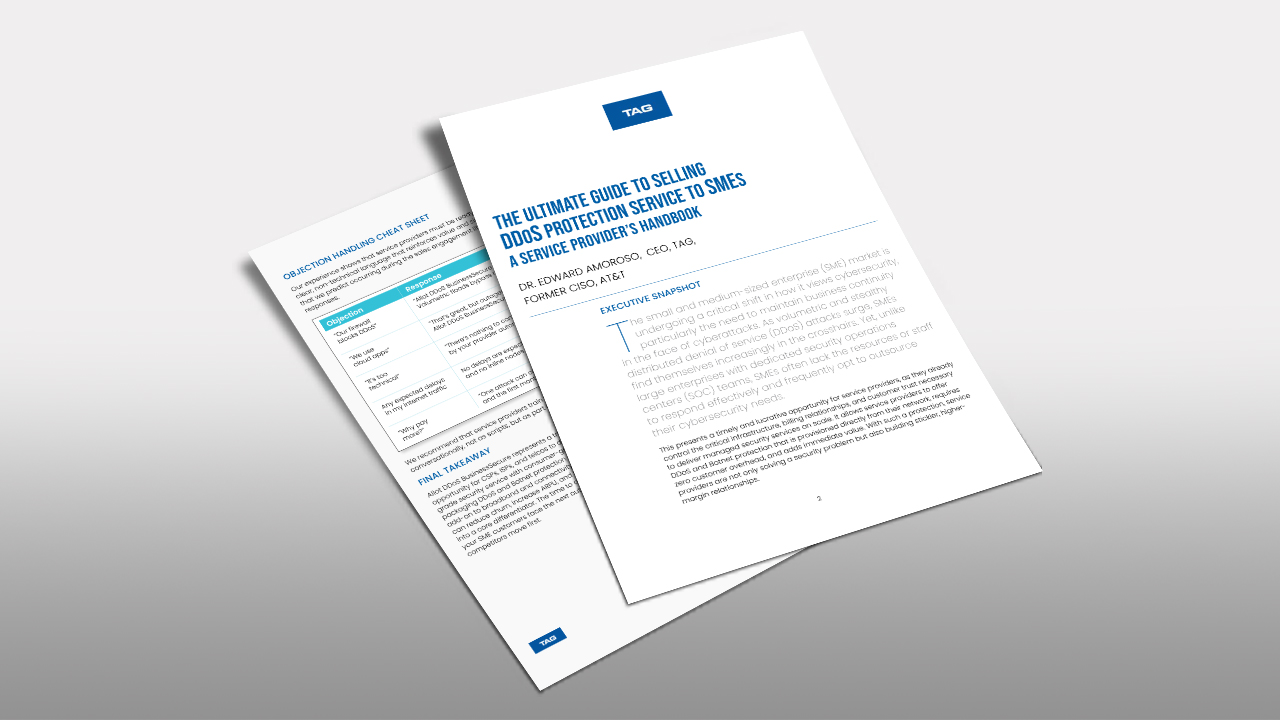 Ed Amoroso’s Ultimate Guide to Selling DDoS Protection Services to SMBs
 July 1, 2026