




Table of Contents
Small businesses have quietly become one of the most important battlegrounds in cybersecurity. As digital tools, from cloud apps to mobile-first workflows, have leveled the playing field, they have also expanded the attack surface. The result is a fundamental shift: SMBs are now operating at enterprise-like speed and scale, but without enterprise-level protection.
This gap between exposure and readiness is the most important takeaway from the latest findings in the Small Businesses, Big Cyber Targets report based on a recent study conducted by Allot and Dynata, where we surveyed small business owners from around the world to get their impressions about cybersecurity and telcos. And it carries major implications for both SMBs and for the telecom providers that serve them.
The New Reality: High Awareness, Low Preparedness
One of the most striking findings is what can best be described as a “preparedness paradox.” SMBs are increasingly aware of cyber risks, yet remain structurally underprepared to address them.
The data makes this clear:
- Nearly 1 in 3 SMBs have already experienced a cyber incident tied to their business
- 95% use personal devices for work, dramatically expanding the attack surface
- Yet adoption of protection mechanisms remains low
This isn’t due to complacency. It reflects a deeper structural issue: SMBs lack the time, expertise, and resources to deploy and manage complex security stacks.
In other words, the problem isn’t awareness. It’s usability.
Complexity Is the Real Threat Multiplier
The survey highlights that cybersecurity complexity has become a barrier in itself. SMBs are not rejecting security; they are overwhelmed by it.
Decision-makers consistently prioritize:
- Efficacy and protection (59%)
- Total cost of ownership (47%)
- Ease of use and management (41%)
This reinforces a key shift in how cybersecurity is evaluated. SMBs are no longer buying features. They are buying outcomes. They want protection that works, that fits their budget and that doesn’t require ongoing management.
This aligns directly with Allot’s messaging principle of “innovative accessibility”, making complex security simple and usable without requiring specialized expertise.
A Shift in Who SMBs Trust
Perhaps the most important, and most disruptive, insight is who SMBs now see as their cybersecurity partner. Across markets, 63% of SMBs say they would trust their telecom provider to deliver cybersecurity. This reflects a deeper behavioral shift. SMBs already rely on telecom providers for connectivity, the backbone of their business. Cybersecurity is increasingly seen as a natural extension of that relationship.
Trust, simplicity, and embedded delivery matter more than traditional vendor positioning. For telecom operators, this is not just validation. It is a strategic opening.
Willingness to Pay Exists, With the Right Conditions
Another long-standing assumption challenged by the data is that SMBs are unwilling to pay for cybersecurity.
In reality, 84% say they are willing to pay their telecom provider for cybersecurity services. But the conditions are clear:
- Pricing must be predictable and transparent
- Deployment must be simple and frictionless
- The service must require little to no ongoing management
SMBs want cybersecurity to behave like connectivity: always on, fully integrated, and effortless.
This is exactly where network-based, zero-touch security models become not just relevant, but necessary.
Cybersecurity Moves Into the Network
Taken together, these findings point to a structural shift in how cybersecurity will be delivered to SMBs. Traditional models – complex tools, multiple vendors, endpoint-heavy solutions – are poorly aligned with SMB reality. The winners in this space will be those who deliver protection differently:
- Embedded within the network
- Delivered through existing relationships
- Designed for simplicity and scale
This aligns directly with Allot’s positioning as a network intelligence-led cybersecurity provider, delivering zero-touch protection at scale through telecom partners.
The opportunity is not to replicate enterprise security. It is to redefine cybersecurity for the masses: accessible, automated, and invisible to the user.
The Bottom Line
SMBs are no longer a secondary market in cybersecurity. They are the center of gravity and they are underserved.
The gap between rising threats and limited resources is growing. But so is the opportunity to close it.
Telecom providers are uniquely positioned to do exactly that.
Next Steps
The full picture and the detailed data behind these insights is available in the complete report, titled Small Businesses, Big Cyber Targets. Read the report now to explore the findings and uncover where the next opportunities in SMB cybersecurity will emerge.
You can also view the on-demand webinar in which we discuss the SMB cybersecurity survey in detail and hear from Wes Hamrick from Verizon who talks about the challenges and solutions related to offering cybersecurity services to SMBs.
Table of Contents
 Small Businesses, Big Cyber Targets | SMB Security Survey, Q2 2026
 SMB Cybersecurity Survey 2026: Insights & Opportunities for Telcos
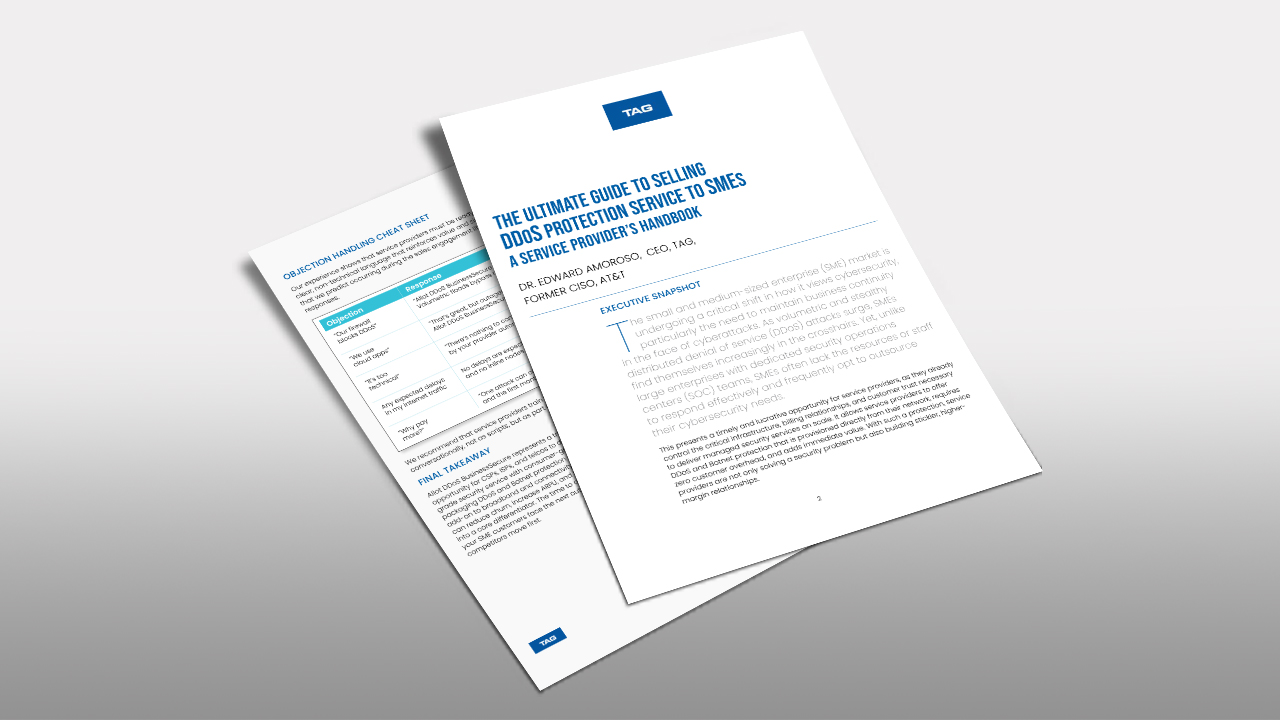 Ed Amoroso’s Ultimate Guide to Selling DDoS Protection Services to SMBs
Recent Blog Posts

 October 13, 2026